



































Tax Expenditure Management Act Signals New Era of Fiscal Transparency, Says LRA Commissioner General

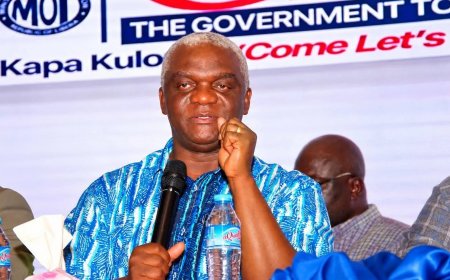
Monrovia, Liberia – Liberia Revenue Authority (LRA) Commissioner General James Dorbor Jallah has described the Tax Expenditure Management Act of 2025 as one of the most significant fiscal governance reforms in recent years, saying it will strengthen transparency, enhance accountability, and ensure that tax incentives deliver tangible benefits to the Liberian economy.
The Act, spearheaded by the Ministry of Finance and Development Planning (MFDP) in partnership with the Liberia Revenue Authority, forms part of the Government of Liberia’s broader agenda to modernize public financial management, improve fiscal discipline, and maximize the impact of public resources on national development.
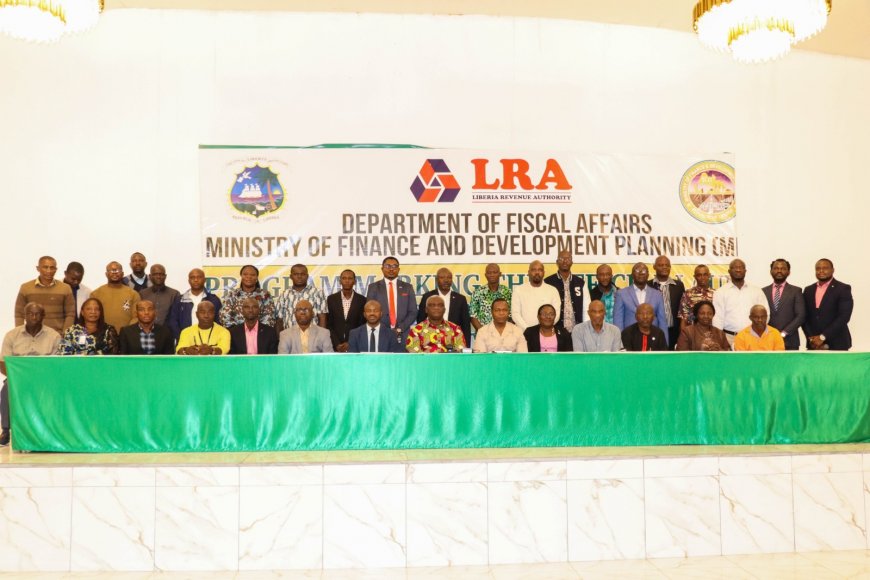
Launching the legislation on Wednesday at Paynesville City Hall, Commissioner General Jallah said the new law marks a turning point in the way Liberia manages tax incentives, introducing stronger oversight mechanisms to ensure that incentives granted to businesses and investors contribute meaningfully to economic growth, job creation, and national development objectives.
He noted that while tax incentives remain an important tool for attracting investment and promoting economic activity, their effectiveness must be measured against the revenue forgone by government and the benefits generated for the country.
“The Tax Expenditure Management Act is not designed to discourage investment or eliminate legitimate incentives,” Jallah emphasized. “Its purpose is to ensure that every incentive granted is justified, transparent, carefully monitored, and periodically evaluated to determine whether it continues to serve the national interest.”
According to the Commissioner General, the legislation introduces a more structured and accountable framework for the management of tax expenditures, enabling government to better assess the fiscal costs associated with incentive programs and make informed decisions based on measurable outcomes.
He cited recent customs data that underscores the need for stronger oversight. Customs tax expenditure increased by 55.9 percent, rising from US$226.6 million in 2024 to US$353.3 million in 2025. During the same period, customs revenue grew by 17.7 percent, increasing from US$221.4 million to US$260.6 million.
The figures show that tax expenditure represented 135.6 percent of customs revenue in 2025, compared to 102.3 percent in 2024—a development that highlights the importance of ensuring that tax incentives generate sufficient economic and social returns to justify their cost.
Jallah said one of the Act’s key innovations is the requirement for annual tax expenditure reporting, which will provide policymakers, legislators, development partners, investors, private sector actors, and the public with a clearer understanding of the scope, cost, and effectiveness of tax incentives.
“This law brings greater visibility to an area of public finance that has historically received limited scrutiny,” he said. “By institutionalizing regular reporting and evaluation, we are creating a system that supports transparency, strengthens public confidence, and promotes evidence-based policymaking.”
The Commissioner General reaffirmed the LRA’s commitment to working closely with the MFDP, the Legislature, government institutions, development partners, and the private sector to ensure the successful implementation of the law and the realization of its intended benefits.
The Tax Expenditure Management Act establishes a comprehensive legal framework governing the approval, administration, monitoring, evaluation, and reporting of tax expenditures. It seeks to ensure that tax incentives are aligned with Liberia’s development priorities, administered transparently, and subjected to regular review to determine their effectiveness and value for money.
The launch brought together senior government officials, representatives of development partners, members of the business community, civil society organizations, and other key stakeholders, reflecting broad support for reforms aimed at strengthening fiscal transparency, improving the management of tax incentives, and boosting domestic revenue mobilization.
As Liberia continues efforts to expand its revenue base and improve public financial management, the new legislation is expected to play a pivotal role in ensuring that tax incentives remain a strategic development tool while safeguarding the country’s fiscal sustainability.
What's Your Reaction?
 Like
0
Like
0
 Dislike
0
Dislike
0
 Love
0
Love
0
 Funny
0
Funny
0
 Angry
0
Angry
0
 Sad
0
Sad
0
 Wow
0
Wow
0