



























Families of Toni Jackson Demand Immediate Release of Autopsy Report as Questions Deepen Over Mysterious Death

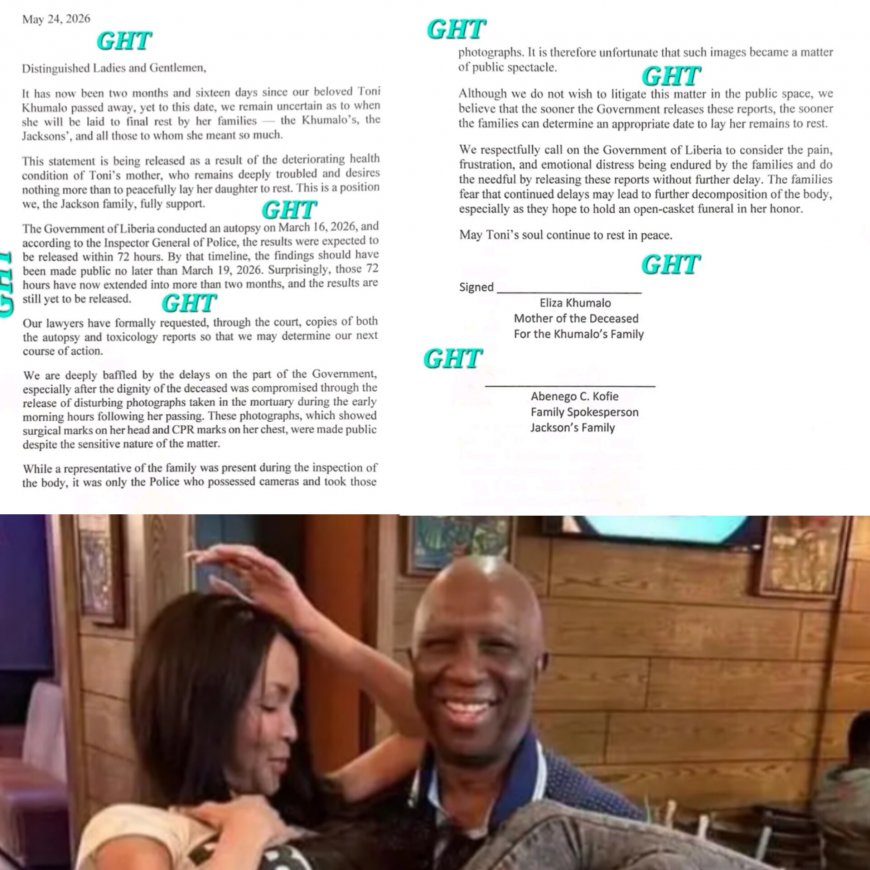
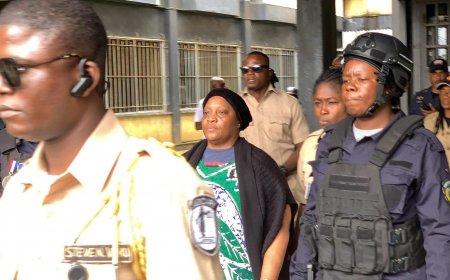
Monrovia, Liberia:More than two months after the tragic death of Liberian socialite Toni Jackson, her grieving family has publicly broken silence, demanding the immediate release of autopsy and toxicology reports while expressing frustration over what they described as unbearable delays and growing emotional distress surrounding the controversial case.
In a strongly worded statement dated May 24, 2026, the Khumalo and Jackson families said they remain uncertain about when Toni will finally be laid to rest, despite the government conducting an autopsy on March 16, one day after her body was discovered in her bedroom on March 15. The family said authorities had initially promised that the results would be released within 72 hours, but more than two months later, the findings remain undisclosed.
“It has now been two months and sixteen days since our beloved Toni Khumalo passed away, yet to this date, we remain uncertain as to when she will be laid to final rest,” the family stated. “We respectfully call on the Government of Liberia to consider the pain, frustration, and emotional distress being endured by the families and do the needful by releasing these reports without further delay.”
The death of Toni Jackson immediately triggered nationwide speculation and murder allegations against her husband, Samuel Jackson, after her body was discovered under mysterious circumstances inside their residence. Since then, the case has become one of Liberia’s most talked-about investigations, dominating social media discussions, radio talk shows, and public debate across the country.
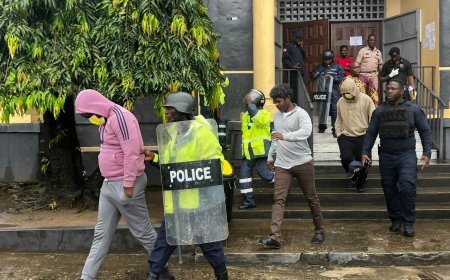
As part of the investigation, forensic officers from the Liberia National Police reportedly returned to Samuel Jackson’s home on multiple occasions, including a third extensive crime scene reconstruction exercise aimed at determining the exact circumstances surrounding Toni’s death. During the process, Samuel Jackson was reportedly asked to demonstrate how he discovered his wife’s body.
According to investigators, Samuel Jackson claimed he found Toni partially lying on the bed while the lower part of her body rested on the floor. Investigators also reportedly gathered additional testimony from a domestic worker who disclosed that blood had been wiped from the bedroom floor following the incident, a revelation that further intensified public suspicion surrounding the case.
Forensic analysts additionally noted indications that a sharp-edged object may have caused a deep wound to Toni Jackson’s head, though investigators reportedly stated that no such instrument had been recovered or produced during the investigation. Authorities have since continued examining blood spatter patterns, wound structures, and trace evidence collected from the residence while conducting further interviews with household staff and witnesses connected to events leading to Toni’s death between March 13 and March 14.
Against that background, the family now says the continued withholding of the autopsy and toxicology reports is compounding their grief and preventing them from achieving closure. The statement revealed that lawyers representing the family have formally petitioned the court for copies of both reports in order to determine their next legal course of action.
The family also condemned the public circulation of disturbing mortuary photographs allegedly showing surgical marks on Toni’s head and CPR marks on her chest. According to the statement, the images were leaked despite the sensitive nature of the matter, with the family asserting that police officers were the only individuals present with cameras during the inspection of the body.
Historically, Liberia has faced persistent criticism over delays in forensic investigations and the handling of high-profile deaths. Legal experts and human rights advocates have repeatedly argued that prolonged investigative delays and limited forensic transparency continue to weaken public confidence in the country’s justice system. For many Liberians, the Toni Jackson case has now become another painful symbol of those longstanding institutional concerns.
As pressure continues to mount, the families warn that further delays could affect funeral arrangements, especially as relatives hope to honor Toni with an open-casket burial. With the nation closely watching every development, many Liberians are now demanding answers, accountability, and justice in a case that continues to raise troubling questions with each passing day.
What's Your Reaction?
 Like
0
Like
0
 Dislike
0
Dislike
0
 Love
0
Love
0
 Funny
0
Funny
0
 Angry
0
Angry
0
 Sad
0
Sad
0
 Wow
0
Wow
0