




















Local Government Advances Reaffirmation of Cities, Townships and Boroughs

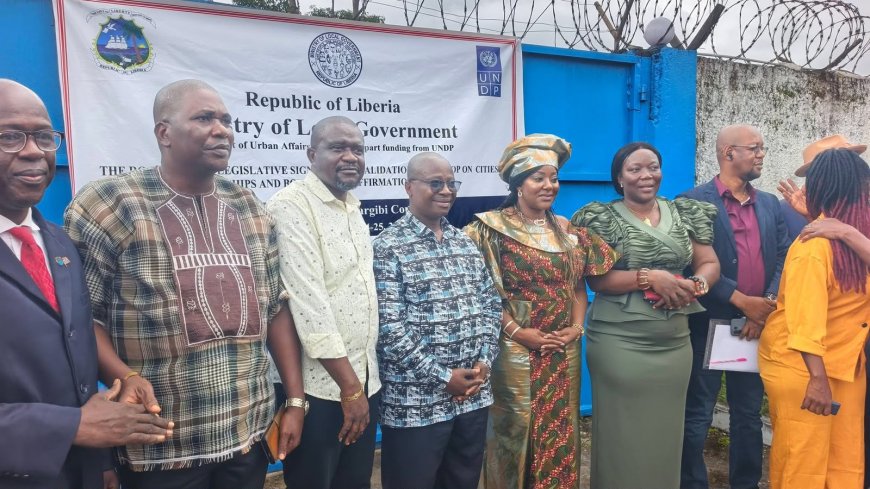
KAKATA, Margibi County — The Government of Liberia is advancing efforts to reaffirm the legal status of cities, townships and boroughs across the country, with officials describing the process as a key step toward strengthening local governance, fiscal decentralization and inclusive development.
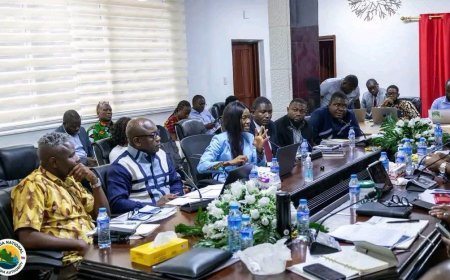
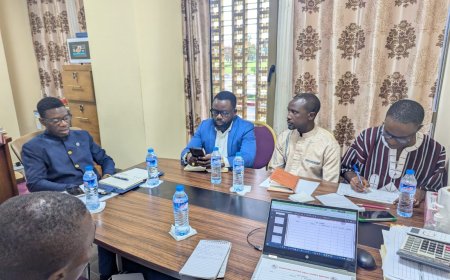
The issue was highlighted Thursday in Kakata City, Margibi County, during the Roadmap for Legislative Sign-Off and Validation Workshop on the Cities, Townships and Boroughs Reaffirmation Report.
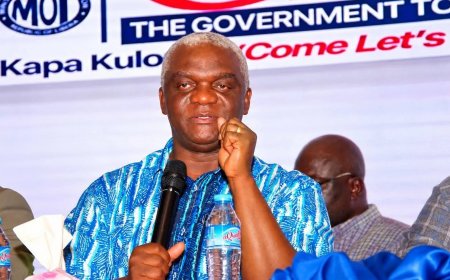
Delivering the keynote address on behalf of Local Government Minister Francis Sakila Nyumalin, Acting Minister for Local Government and Decentralization, Hon. Edward K. Mulbah, said the exercise is being conducted in fulfillment of provisions of the Local Government Act of 2018.
At the center of the process is Section 2.16(c) of the Act, which provides for the continued legal status of existing cities, townships and boroughs, while requiring the Minister responsible for Local Government to report to the Legislature seven years after the law’s enactment for purposes of reaffirmation.
Mulbah noted that Liberia has now entered the eighth year since the enactment of the law, meaning the reaffirmation process should have been undertaken in 2025.
He also emphasized that the law provides for cities that fail to meet prescribed criteria to be relegated to township status.
“This is the law,” Mulbah stressed, while explaining the legal basis for the ongoing exercise.
According to the Acting Minister, implementing the law could generate social, political and economic benefits by strengthening local government institutions and creating a stronger foundation for development outside Monrovia.
One immediate outcome, he said, would be the reaffirmation and gazettement of more than 30 cities that were reportedly created through Executive Orders but have not been formally gazetted.
Mulbah explained that once reaffirmed, qualifying cities would receive formal City Charters and City Councils with clearly defined responsibilities.
He said the councils would also have authority to collect certain local revenues, including property taxes and business-related fees, subject to the applicable laws and regulations.
The Acting Minister said stronger local revenue mechanisms would enable cities to retain and utilize a portion of locally generated resources for development priorities.
“The idea is to ensure that local governments have the resources and authority to respond to the needs of their people,” Mulbah said.
He identified roads, waste management, markets, parking facilities and building permits among areas where locally generated revenues could support municipal development.
Mulbah said the decentralization model would reduce the dependence of cities on the central government for every local development need by strengthening their ability to mobilize and manage resources under the oversight of elected or designated local authorities.
He further explained that a portion of locally generated revenue could remain within cities to address priorities such as road maintenance and waste management, while also contributing to broader county development initiatives.
Nationwide Assessment
Meanwhile, Deputy Minister for Urban Affairs, Hon. Fatima Bintu Sirleaf, described the validation workshop as an important step in Liberia’s decentralization and local governance reform process.
Sirleaf said the report being validated contains findings from a nationwide assessment of cities, townships and boroughs across all 15 counties.
“The assessment examined population, municipal boundaries, infrastructure, basic services, land-use patterns, economic activity and institutional capacity,” she said.
According to Sirleaf, the assessment was conducted through inter-ministerial coordination, desk reviews, field assessments, interviews with local authorities, focus-group discussions and geospatial analysis.
She said the findings are intended to provide a factual basis for determining the legal and administrative status of local government areas and supporting the next steps in the decentralization process.
The Ministry of Local Government is expected to use the outcome of the validation process to guide the legislative sign-off and subsequent actions required to reaffirm the status of qualifying cities, townships and boroughs.
The initiative forms part of the government’s broader decentralization agenda aimed at strengthening local institutions, improving fiscal authority and bringing public services and decision-making closer to citizens across Liberia.
What's Your Reaction?
 Like
0
Like
0
 Dislike
0
Dislike
0
 Love
0
Love
0
 Funny
0
Funny
0
 Angry
0
Angry
0
 Sad
0
Sad
0
 Wow
0
Wow
0