


























Harnessing Liberia’s Youthful Population Takes Center Stage on World Population Day

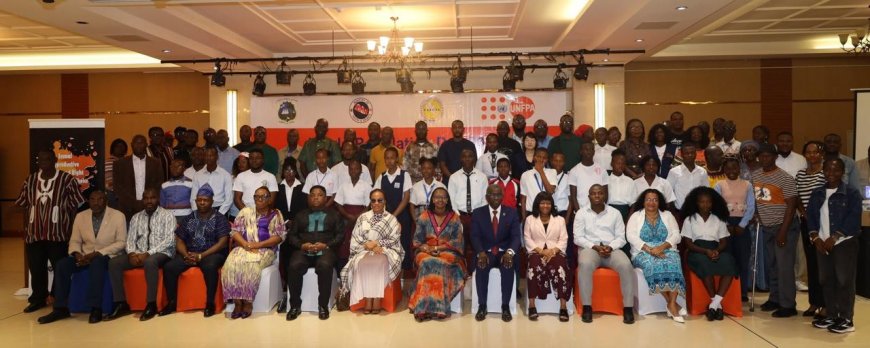
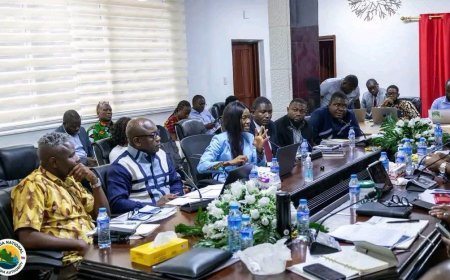
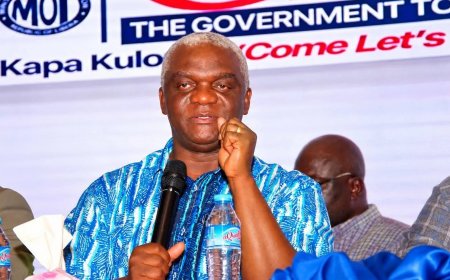
Monrovia – Government officials, lawmakers, United Nations representatives, development partners, civil society organizations, and young people on Friday commemorated World Population Day 2026 with renewed calls for greater investments in Liberia’s youth, describing the country’s growing young population as both its greatest opportunity and its most pressing responsibility.
The observance was held under the global theme, “Realizing the Hopes and Aspirations of Young People Today and for the Future,” and focused on the challenges and opportunities facing young Liberians as the country seeks to harness its demographic potential.
Speaking at the event, UNFPA Country Representative Dr. Mady Biaye highlighted findings from UNFPA’s newly launched global report, Lives, Choices and Futures, which surveyed more than 108,000 young adults across 73 countries. According to the report, young people continue to value marriage, family life, and parenthood, but economic insecurity, unstable employment, and housing challenges are preventing many from realizing those aspirations.
“Young people have not lost their dreams,” Dr. Biaye said. “They are simply living under immense economic pressure.”
He noted that 88 percent of young adults surveyed identified financial security as a key requirement for parenthood, while 87 percent cited stable employment. He said the findings strongly resonate with Liberia, where approximately 75 percent of the population is under the age of 35.
Dr. Biaye called for increased investments in decent jobs, education, housing, and sexual and reproductive health services, stressing that empowering young people today is essential to building a peaceful and prosperous Liberia tomorrow.
United Nations Resident Coordinator Christine Umutoni encouraged young Liberians to view themselves as leaders and agents of change. Drawing from her personal experiences as a refugee, she recounted overcoming hardship through determination, education, and community engagement.
She urged young people not to allow challenges to define their future and emphasized that leadership begins long before one holds public office.
“Young people do not have to wait to be invited to the table,” Umutoni said. “Leadership begins with taking responsibility, serving communities, and becoming involved in causes that improve society.”
She also called for stronger efforts to address teenage pregnancy, stressing that boys and men must be included in prevention efforts and that the issue should not be viewed solely as a challenge for girls.
Delivering the keynote address on behalf of Senate Pro Tempore Nyonblee Karnga-Lawrence, River Gee County Senator Francis Dopoh reaffirmed the Liberian Senate’s commitment to implementing the International Conference on Population and Development (ICPD) Programme of Action.
Dopoh highlighted the recent establishment of the Legislative Committee on Population and Development, which is tasked with integrating population dynamics into national laws, policies, and budgets.
He said the Legislature remains committed to expanding healthcare access, promoting gender equality, supporting women and girls, and increasing investments in education, vocational training, and employment opportunities for young people.
“Liberia’s youthful population is our greatest resource,” Dopoh said. “The decisions we make today will determine whether we transform that demographic reality into a demographic dividend.”
Also speaking at the event, Liberia Institute of Statistics and Geo-Information Services (LISGIS) Director General Richard Ngafuan underscored the importance of data-driven decision-making in national development.
Citing findings from the 2022 National Population and Housing Census, Ngafuan said Liberia’s population has surpassed 5.2 million people, with more than half now living in urban areas. He noted that nearly two-thirds of Liberians are under the age of 35.
According to him, Liberia stands at a critical moment where strategic investments in education, healthcare, skills development, and employment could transform the country’s youthful population into a powerful driver of economic growth.
“Demographic dividends do not emerge automatically,” Ngafuan said. “They are earned through deliberate policies and sustained investments.”
Representing Health Minister Dr. Louise M. Kpoto, Assistant Minister for Preventive Services Dr. Cuallau Jabbeh-Howe said the Ministry of Health remains committed to improving services that directly impact young people.
He identified drug and substance abuse, teenage pregnancy, low uptake of family planning services, gender-based violence, and unemployment as major concerns affecting Liberia’s youth.
Dr. Jabbeh-Howe said the ministry is working with partners to expand access to maternal and child healthcare, reproductive health services, mental health care, and substance abuse treatment programs.
“A healthy population is a wealthy population,” he said, adding that investments in youth health are critical to achieving national development goals.
Meanwhile, Montserrado County District Five Representative Priscilla Abram Cooper called on lawmakers to match the optimism of Liberia’s young people with concrete legislative action.
She referenced findings from the UNFPA Demographic Futures Survey indicating that economic hardship and housing constraints remain major barriers preventing many young people from achieving independence and starting families.
Representative Cooper urged greater budgetary support for technical and vocational education, youth employment programs, reproductive health services, and policies that keep girls in school.
She also emphasized the need for legislation that supports migration management, youth development, and human capital investment.
Throughout the celebration, speakers agreed that Liberia’s youthful population represents one of the country’s greatest assets. However, they stressed that unlocking the country’s demographic dividend will require coordinated action by government, lawmakers, development partners, civil society organizations, communities, and the private sector.
The observance concluded with renewed commitments to place young people at the center of national development efforts through investments in education, healthcare, job creation, innovation, and evidence-based policymaking.
Participants said empowering young people today remains the surest path toward building a prosperous, inclusive, and sustainable Liberia for future generations.
What's Your Reaction?
 Like
0
Like
0
 Dislike
0
Dislike
0
 Love
0
Love
0
 Funny
0
Funny
0
 Angry
0
Angry
0
 Sad
0
Sad
0
 Wow
0
Wow
0