
























“‘We Have Nowhere to Sell": Rubber Farmers Accuse B&B Rubber Factory Incorporated of Delayed Purchases Amid Boakai’s Raw Rubber Export Ban

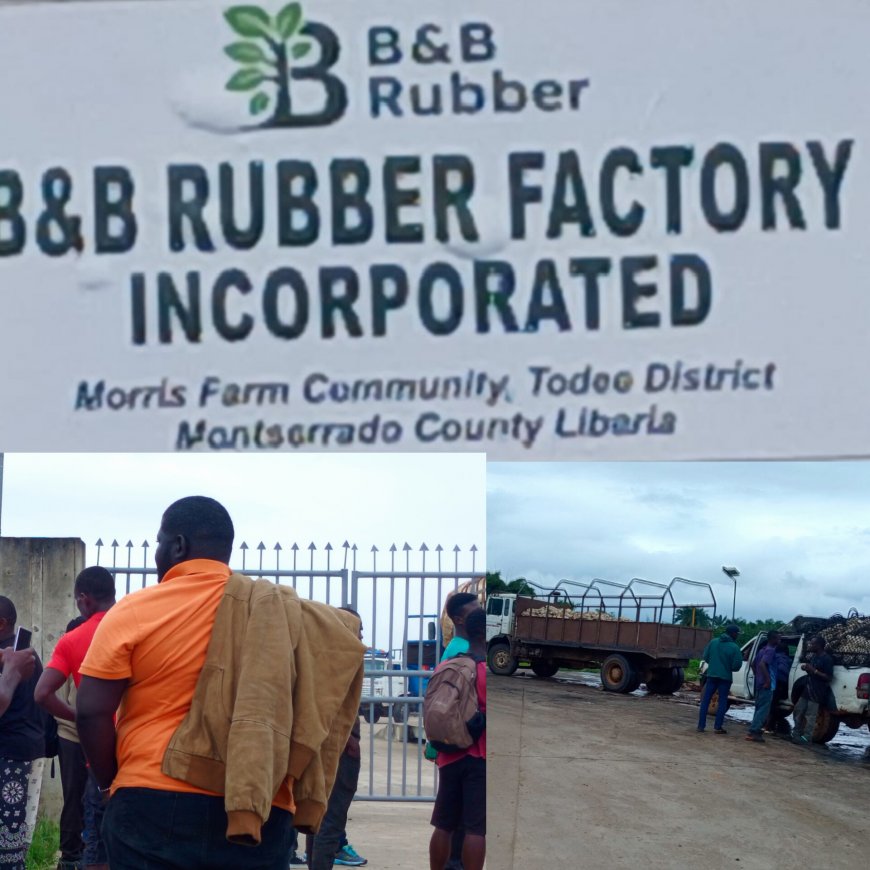
Monrovia, Liberia:As Liberia prepares to celebrate its 179th Independence Day, hundreds of rubber farmers and brokers have raised concerns over what they describe as prolonged delays and restrictions in the purchase of raw rubber by B&B Rubber Factory Incorporated, saying the situation has left them unable to pay workers and meet other financial obligations following the implementation of President Joseph Nyuma Boakai Sr.'s Executive Order No. 166, which bans the export of unprocessed natural rubber effective July 1, 2026.
The farmers said the Executive Order has effectively made local processing companies their primary market because the export of raw rubber is no longer permitted. While they support the government's objective of promoting local value addition, they argue that processors must have the capacity to purchase rubber promptly if the policy is to benefit producers.
"Our only market now is the local factories," one farmer said. "When they stop buying or delay purchases, we are left with no alternative. Our workers are demanding their wages, and we have no money to pay them."
According to the farmers, producers from Nimba, Bong, Margibi and several other counties transported truckloads of raw rubber to B&B Rubber Factory Incorporated, expecting to sell before the Independence Day celebrations.
However, they alleged that many vehicles were turned away after the company reportedly limited purchases to only a handful of suppliers. The company has not publicly responded to these allegations, and they could not be independently verified at the time of publication.
Several suppliers also claimed that even after their rubber was weighed and accepted, payments were not made immediately, forcing some of them to spend one or two nights at the factory while waiting to receive their money. They said the delays have placed additional financial pressure on already struggling farming communities.
The farmers further disclosed that B&B Rubber Factory Incorporated recently increased its buying price by approximately US$100 per metric ton, but argued that the price adjustment has provided little relief because many producers have been unable to sell their rubber due to the reported delays and purchasing restrictions.
They warned that the slowdown in purchases has created tension between plantation owners and workers, many of whom depend on timely wages to provide food and other necessities for their families ahead of the national holiday. Plantation owners said they cannot meet payroll obligations without receiving prompt payment for their rubber.
Executive Order No. 166 was issued to strengthen Liberia's rubber industry by requiring more rubber to be processed locally before export, with the goal of creating jobs, increasing government revenue and expanding domestic manufacturing. While processed rubber products remain eligible for export, the shipment of unprocessed natural rubber is now prohibited.
The affected farmers are calling on the Government of Liberia, particularly the Ministries of Commerce and Industry and Agriculture, to engage B&B Rubber Factory Incorporated and other local processors to ensure that farmers can sell their produce without unnecessary delays. They warned that unless purchasing capacity improves, the intended benefits of the government's policy could be undermined by growing hardship among thousands of rubber-producing families.
What's Your Reaction?
 Like
0
Like
0
 Dislike
0
Dislike
0
 Love
0
Love
0
 Funny
0
Funny
0
 Angry
0
Angry
0
 Sad
1
Sad
1
 Wow
1
Wow
1