























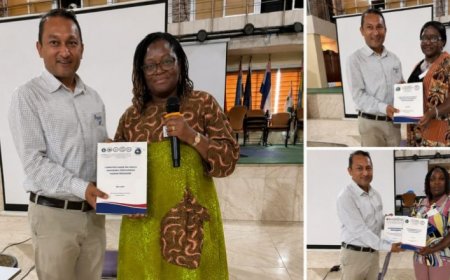






More Than 20 Journalists Trained to Rethink SRHR Reporting Amid Misinformation
The Amplifying Rights Network (ARN), a coalition advancing sexual and reproductive health and rights in Liberia, has trained over 20 journalists in Monrovia to improve ethical reporting, counter misinformation, and amplify marginalized voices in SRHR coverage.


PAYNESVILLE, LIBERIA — April 30, 2026: Amplifying Rights Network (ARN), a coalition of over ten civil society organizations in Liberia dedicated to advancing Sexual and Reproductive Health and Rights (SRHR), has trained more than 20 journalists, bloggers, and digital content creators in Monrovia, urging a shift in how sensitive health issues are reported amid growing concerns over misinformation and stigma.
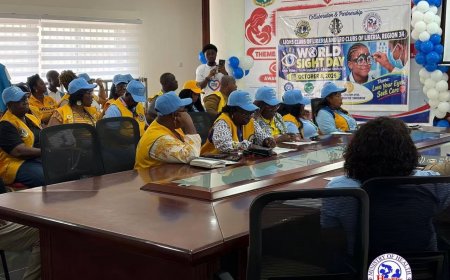
The high-level, one-day media dialogue at a local hotel in Paynesville convened a cross-section of mid-tier media practitioners within an increasingly complex information ecosystem, where the intersection of culture, silence, and digital misinformation continues to distort public understanding of SRHR realities, thereby necessitating a deliberate shift toward ethical precision, contextual depth, and rights-based storytelling.
Spearheading the technical engagement, independent media expert Torwon Suluteh Brown delivered a rigorously framed critique of prevailing reportage patterns, asserting that the chronic superficiality characterizing SRHR coverage not only undermines public health literacy but also inadvertently reinforces the very stigma journalists are mandated to dismantle.
Madam Brown advanced a compelling argument for a paradigmatic shift in journalistic practice, urging participants to transcend episodic storytelling and instead interrogate the structural, policy-driven, and socio-cultural determinants that shape reproductive health outcomes across Liberia’s diverse communities.
He further emphasized that the ethical burden of SRHR reporting extends beyond narrative construction into the realm of accountability, where journalists must exercise disciplined verification, nuanced framing, and deliberate sensitivity, particularly when engaging individuals whose lived experiences are deeply entangled with trauma, marginalization, and societal silence.
The training sessions unfolded through a series of methodologically structured engagements, equipping participants with advanced tools for sourcing credible information, constructing layered storylines, and conducting interviews that safeguard both dignity and confidentiality, especially in cases involving survivors of abuse or individuals navigating complex reproductive health decisions.
Central to the discourse was the destabilizing role of misinformation, which, amplified by informal media circuits and unregulated digital platforms, continues to propagate distortions capable of eroding public trust in health systems while simultaneously obstructing access to accurate, life-saving information.
Participants engaged in critical reflections on the operational constraints confronting SRHR reporting in Liberia, acknowledging that deeply entrenched cultural taboos and moral sensitivities frequently inhibit open dialogue, thereby restricting access to authentic narratives and diminishing the depth of journalistic inquiry.
Within this constrained environment, journalists noted that women and young people remain disproportionately silenced, often navigating fear of stigma, social exclusion, and reputational harm, all of which collectively impede the documentation of their realities within mainstream media frameworks.
Despite these systemic barriers, the engagement was widely characterized by participants as transformative, with several acknowledging that the training exposed fundamental deficiencies in their prior approaches while simultaneously recalibrating their understanding of ethical responsibility within sensitive reporting contexts.
The dialogue further reinforced the imperative of amplifying marginalized voices, not as a performative exercise in inclusion, but as a substantive journalistic obligation essential to constructing a more accurate and representative national narrative on reproductive health.
For ARN, the initiative constitutes a strategic extension of its institutional mandate to reposition the media as an indispensable actor within Liberia’s broader SRHR advocacy architecture, where informed reporting is not merely complementary but central to policy influence, public awareness, and social transformation.
The network continues to pursue an integrated advocacy framework aimed at expanding access to verified information, strengthening health service delivery systems, and advancing legal protections for populations structurally excluded from equitable healthcare access.
However, the engagement also surfaced a critical tension within the media ecosystem, the persistent disconnect between capacity-building interventions and their sustained translation into newsroom practice, particularly within environments constrained by limited resources, editorial pressures, and competing news priorities.
This structural inconsistency raises substantive questions regarding the long-term efficacy of such trainings, especially in the absence of institutional reinforcement mechanisms capable of embedding ethical and analytical rigor into routine journalistic workflows.
As the dialogue drew to a close, participants articulated a collective commitment to operationalizing the principles advanced during the training, pledging to institutionalize stronger verification protocols, elevate ethical standards, and produce reporting that is both contextually grounded and socially responsible.
What's Your Reaction?
 Like
0
Like
0
 Dislike
0
Dislike
0
 Love
0
Love
0
 Funny
0
Funny
0
 Angry
0
Angry
0
 Sad
0
Sad
0
 Wow
0
Wow
0