


























GoL Moves to Secure 5,000-Unit Smart City Housing Deal with TAF Africa Global
The Government of Liberia has negotiated a 5,000-unit smart city housing project with TAF Africa Global, designed to deliver affordable housing, modern infrastructure, and economic opportunities in the Monrovia growth corridor.

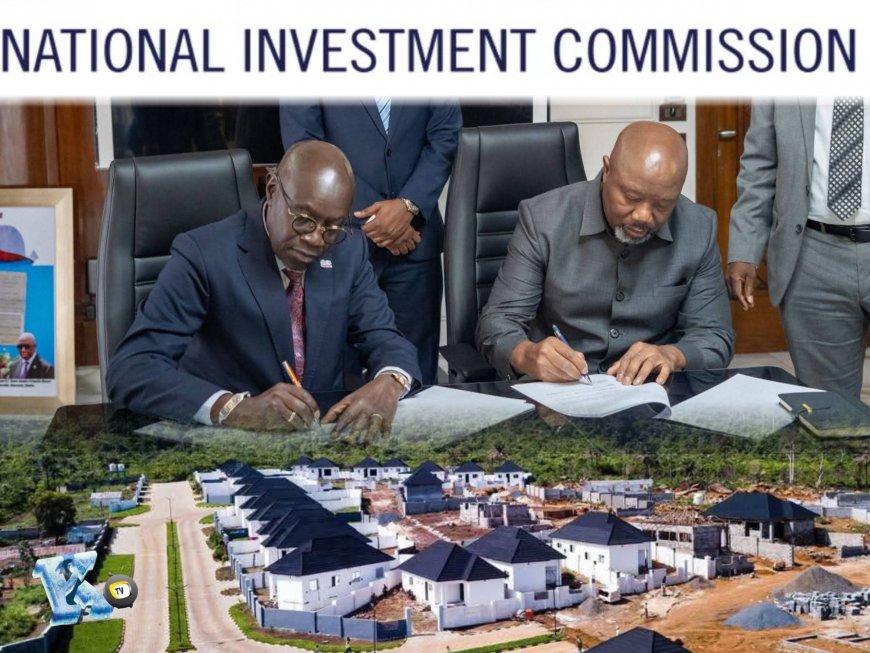
MONROVIA, LIBERIA — April 7, 2026: The Government of Liberia, through the National Investment Commission, has initiated advanced discussions aimed at securing a 5,000-unit smart city housing development in partnership with TAF Africa Global Limited, a major Pan-African real estate firm led by Mustapha Njie, following an official invitation extended by President Joseph Nyuma Boakai, with negotiations centered on transforming the Monrovia growth corridor through a large-scale, integrated urban housing initiative.
The proposed project outlines a comprehensive smart city model spanning approximately 500 hectares, incorporating 5,000 affordable housing units alongside essential urban infrastructure, with a development approach designed to combine residential, commercial, and social systems within a unified and sustainable framework intended to address Liberia’s growing housing deficit.
The initiative, coordinated through the Office of the Presidential Special Envoy on Investment under Ambassador Mohammed M. Bah, is structured to align with national investment priorities, ensuring that the project integrates seamlessly with government-led urban planning frameworks while attracting private sector capital and technical expertise to accelerate implementation.
Beyond housing delivery, the proposed smart city is structured to include schools, healthcare facilities, green spaces, and modern infrastructure systems, positioning the development as a fully integrated ecosystem that supports long-term community stability, efficient service delivery, and sustainable urban expansion within Liberia’s capital region.
Economic projections tied to the project indicate a significant impact on employment generation, with emphasis placed on creating job opportunities for young people, strengthening local construction capacity, and expanding participation of Liberian contractors and suppliers within the broader project value chain, thereby reinforcing domestic economic linkages.
The partnership also signals a strategic effort to develop Liberia’s mortgage and housing finance sector, as structured homeownership within the proposed development is expected to create demand for long-term financing mechanisms, contributing to the formalization and expansion of the country’s housing market under regulated financial systems.
What's Your Reaction?
 Like
0
Like
0
 Dislike
0
Dislike
0
 Love
0
Love
0
 Funny
0
Funny
0
 Angry
0
Angry
0
 Sad
0
Sad
0
 Wow
0
Wow
0