

































Only 15% of Children Fully Vaccinated: Health Experts Push Urgent Action in Liberia
Pediatric experts and global health partners have launched a major immunization awareness campaign in Monrovia to address low vaccination rates in Liberia, where only about 15% of children are fully immunized. The initiative aims to strengthen community outreach, combat misinformation, and improve child survival through sustained public health education.

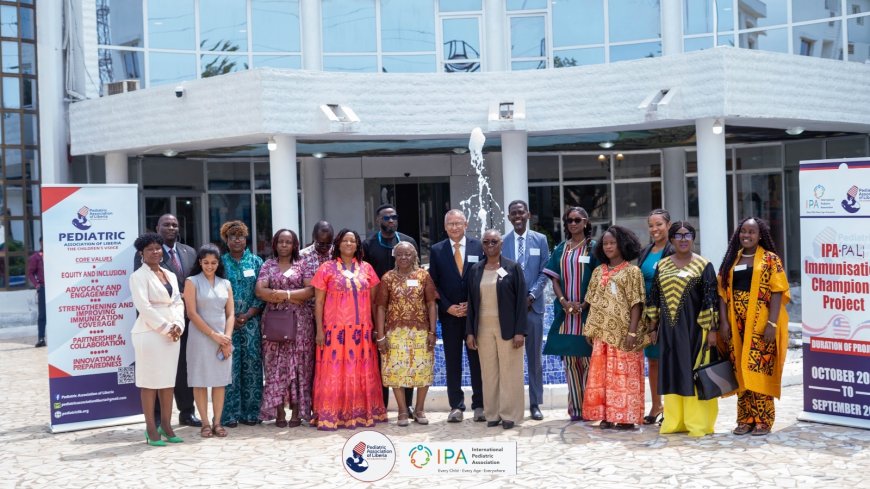
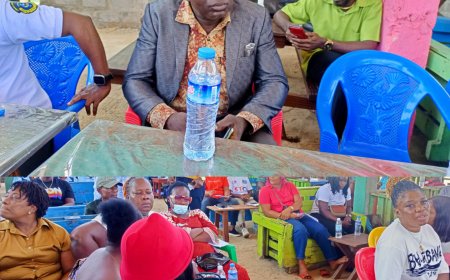
Monrovia, Liberia: The International Pediatric Association (IPA), in partnership with the Pediatric Association of Liberia (PAL), has concluded a two-day vaccination awareness workshop in Monrovia.
The event, held at the Sinkor Palace Hotel with theme "Immunization Champion Project" brought together health workers, international policymakers, and child health advocates from across Montserrado County.
Health policy makers from Indonesia, Nigeria and others around the world shared that immunization remains one of the most effective ways to protect children.
Vaccines help the body build resistance against dangerous diseases before infection occurs, Yet, despite this, many children in Liberia are still left behind.
Speaking at the opening, Dr. Cecelia Nuta, President of the Pediatric Association of Liberia, stressed the urgency of strengthening child health awareness.
“We must continue to raise awareness and correct false information about vaccines,” she said. “Parents need to understand that even if a child misses a dose, it is not too late to catch up.”
Dr. Nuta pointed out that one of the biggest challenges is reaching remote communities. According to her, limited outreach services mean many families do not have regular access to vaccination teams.
She also addressed growing concerns around the “Immunization Champions” project, a three-year initiative being rolled out under the IPA-PAL collaboration backed by the Government through the Ministry of Health under Dr. Lewis Kpoto.
“This project is not in response to any outbreak,” Dr. Nuta clarified. “It is about prevention, making sure we don’t repeat past mistakes.”
She referenced lessons from the Ebola crisis, where weak community engagement contributed to the rapid spread of the virus.
That experience, she noted, highlights the importance of building trust and awareness at the grassroots level.
A recent report by Innovations for Poverty Action (IPA) paints a worrying picture. In some communities, only about 15 percent of children are fully immunized. That leaves a large number of children exposed to diseases that could otherwise be prevented.
Dr Nuta also disclose that ongoing initiative, trained community health workers will spend the next three years working directly with families educating parents, addressing fears, and encouraging vaccination.
The program is being implemented with support from the Ministry of Health and other international partners, signaling a coordinated effort to improve child survival across the country.
What's Your Reaction?
 Like
0
Like
0
 Dislike
0
Dislike
0
 Love
0
Love
0
 Funny
0
Funny
0
 Angry
0
Angry
0
 Sad
0
Sad
0
 Wow
0
Wow
0