







President Boakia Submits US$45M Fiscal Top-Up, Pushing 2026 National Expenditure Plan To US$1.29B
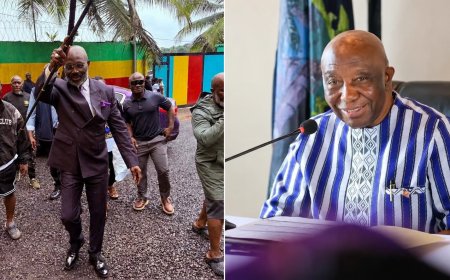
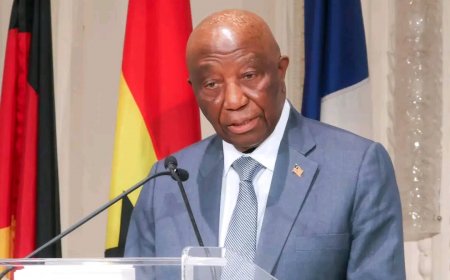
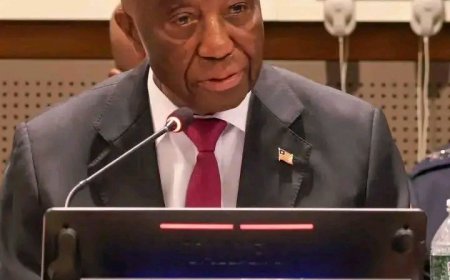
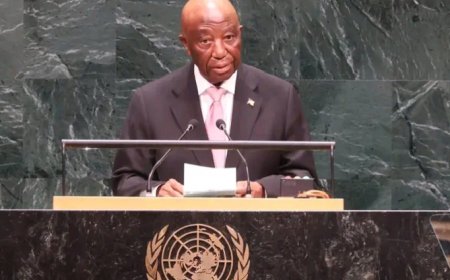
President Joseph Nyuma Boakai has submitted a US$45 million supplementary budget to Liberia’s Legislature, increasing the 2026 national expenditure to US$1.2947 billion, with allocations across key sectors now under House review.

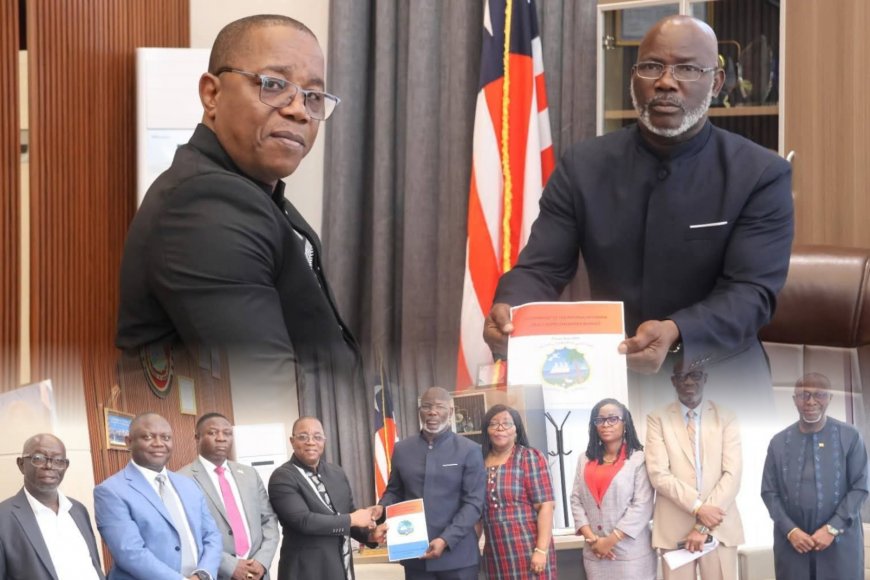
MONROVIA, LIBERIA — April 13, 2026: President Joseph Nyuma Boakai, Sr. has formally submitted a US$45 million draft supplementary budget to the National Legislature for enactment, a fiscal adjustment that raises Liberia’s 2026 national expenditure ceiling from US$1.2497 billion to US$1.2947 billion, with the proposal now undergoing technical and policy scrutiny before the House of Representatives.
The submission, transmitted to House Speaker Richard Nagbe Koon, is grounded in Section 23.1 of the amended and restated Public Financial Management Law of 2009, and is tied to the administration’s stated drive to accelerate service delivery under the ARREST Agenda for Inclusive Development (AAID), positioning the additional spending as part of a structured policy implementation push rather than an isolated budget expansion.
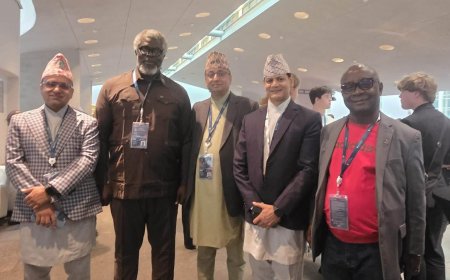
The document was formally presented to the Legislature by Acting Minister of Finance and Development Planning Anthony G. Myers on behalf of Minister Augustine Kpehe Ngafuan, who is currently leading a Government of Liberia delegation at the World Bank/International Monetary Fund Spring Meetings in Washington, D.C., a transition that placed the fiscal communication under the stewardship of the ministry’s acting leadership.
According to the fiscal disclosure accompanying the submission, the US$45 million is financed through US$40 million in delayed World Bank budget support from FY2025 and US$5 million from domestic revenue overperformance, with officials attributing the local revenue gains to strengthened tax policy measures and improved administrative efficiency within revenue collection systems.
Sectoral allocations show US$11.4 million directed to Public Administration, US$10.9 million to Health, and US$7.3 million to Education, with officials indicating that the education component is intended to support teacher enrollment, school feeding expansion, and settlement of outstanding obligations to the West African Examinations Council, while health funding includes drug response initiatives and preparatory work for the National Children’s Hospital land acquisition.
Further disaggregation of the budget assigns US$7.2 million to infrastructure and basic services, including US$4.02 million earmarked for technical preparation and deployment of the “yellow machines” initiative, alongside US$5.1 million for security and rule-of-law institutions and US$1.05 million for social development services, which collectively account for a targeted intervention structure across governance, infrastructure, and human capital priorities.
House Speaker Richard Nagbe Koon has acknowledged receipt of the submission, commending the Ministry of Finance and Development Planning for what he described as strategic prioritization of social sector investments, particularly highlighting components tied to education infrastructure support and expanded public service delivery mechanisms.
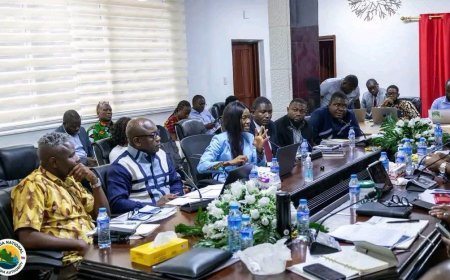
The House Ways, Means, Finance and Development Planning Committee has since commenced detailed line-by-line scrutiny of the proposal, examining revenue sources, legal compliance, and fiscal alignment, as the Legislature evaluates the expansion under a special session that also includes broader national financial discussions.
Final approval of the draft supplementary budget will determine the revised 2026 fiscal ceiling, which stands at US$1,294,665,191 pending legislative action, reflecting a 3.6 percent increase and a broader year-on-year expansion in national spending architecture as the Boakai administration advances its fiscal and development priorities.
What's Your Reaction?
 Like
0
Like
0
 Dislike
0
Dislike
0
 Love
0
Love
0
 Funny
0
Funny
0
 Angry
0
Angry
0
 Sad
0
Sad
0
 Wow
0
Wow
0