








Butt Nacked, Yekeh Statements Draw Concern as CSOs Demand War Crimes Court Now
Recent controversial statements by Joshua Milton Blaye and Representative Yekeh Kolubah have sparked renewed pressure from civil society organizations for the establishment of a War and Economic Crimes Court in Liberia. CSOs warn that such rhetoric risks reviving past conflict tensions, especially amid the Liberia-Guinea situation. Protesters and advocacy groups are now calling on the Legislature to pass a law to make the court permanent, emphasizing the need for justice, accountability, and long-term peace.

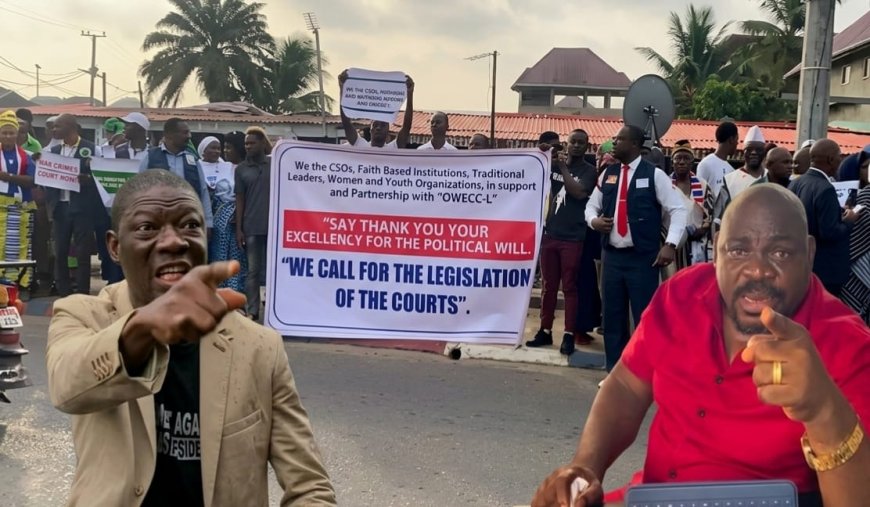
Paynesville, Liberia: Mounting concern over recent controversial statements by former warlord Joshua Milton Blaye and Montserrado County District 10 Representative Yekeh Kolubah has intensified calls from civil society organizations (CSOs) for the urgent establishment of a War and Economic Crimes Court in Liberia.
The statements widely viewed by civil society groups as provocative have instilled concerns on the Liberia social media amid territorial tensions between Liberia and neighboring Guinea, with many warning that such rhetoric risks reopening old wounds from the country’s brutal civil conflict.
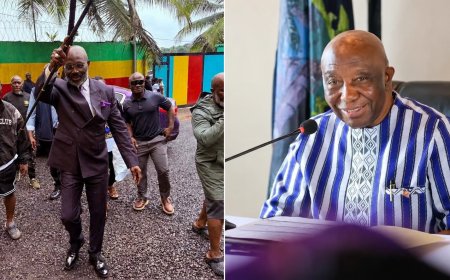
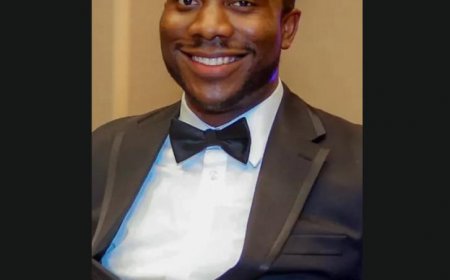
Joshua Milton Blaye, popularly known as General Butt Naked, a loyalist to President Joseph Nyumah Boakai recently took to Facebook Live, cautioning that failure by Guinea to withdraw from disputed areas could result in loss of lives.
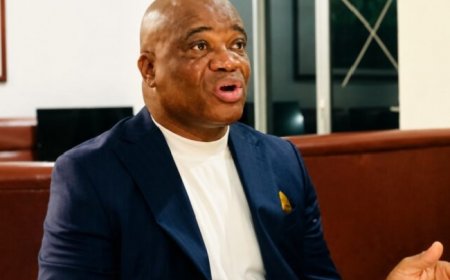
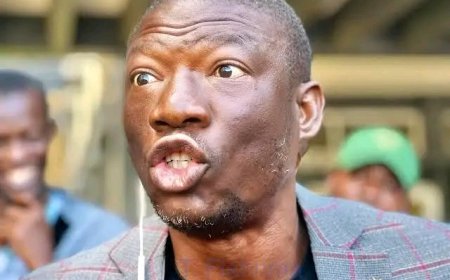
Around the same time, remarks attributed to Representative Kolubah also drew criticism for their tone, which CSOs say could inflame an already fragile situation.
“These are not just ordinary statements they are dangerous reminders of a past we are still struggling to heal from,” a civil society leader said. “When influential figures speak carelessly about conflict, it creates fear and uncertainty among ordinary citizens.”
Against this backdrop, scores of CSOs, including faith-based institutions, traditional leaders, women and youth groups, and the Organized West African Economic Crime Coalition of Liberia (OWECC-L), have renewed pressure on the government of Joseph Nyuma Boakai to move swiftly in establishing a permanent War and Economic Crimes Court through legislation.
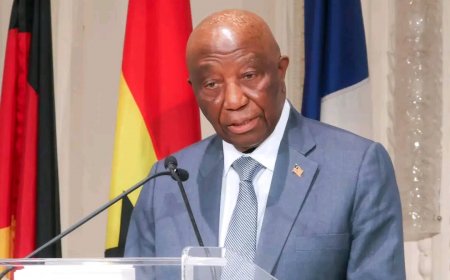
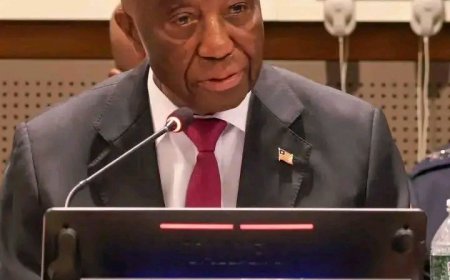
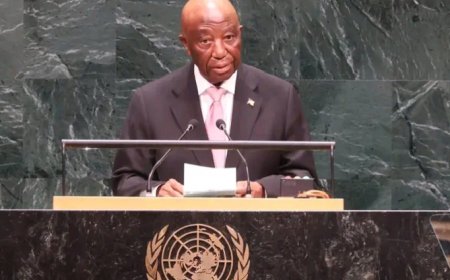
Earlier in his administration, President Boakai issued an executive order to initiate the court’s creation, describing it as a vital step toward justice, accountability, and national healing.
However, the President also acknowledged that the court’s legitimacy and independence would ultimately depend on legislative backing.
CSOs now argue that the process has stalled.
“An executive order is not enough,” a youth advocate stated during a peaceful protest held Tuesday in Monrovia. “We need a law passed by the Legislature something permanent that cannot be easily reversed.”
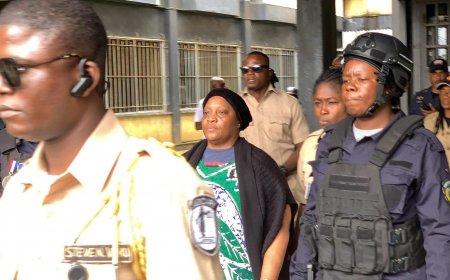
Protesters gathered near the President’s rehab residence carrying placards reading, “Justice Delayed is Justice Denied” and “Establish the War Crimes Court Now.” The demonstration, organizers say, was directly influenced by the recent statements and the fear they have generated.
Speaking to journalists, Momolu S. Varney of the National Muslim Council of Liberia stressed that accountability mechanisms are critical in preventing future violence.
“If a War Crimes Court had been in place earlier, Liberia’s history might have been different,” Varney said. “Justice sets precedent, and precedent deters impunity.”
Varney also revealed that the coalition is advocating for the establishment of an Anti Corruption Court alongside the War and Economic Crimes Court, noting that corruption and conflict are often interconnected.
The push for these courts stems from recommendations by the Truth and Reconciliation Commission, which documented widespread human rights violations during Liberia’s civil wars from 1989 to 2003.
The TRC called for prosecutions for war crimes, crimes against humanity, sexual violence, and the looting of public resources.
What's Your Reaction?
 Like
0
Like
0
 Dislike
0
Dislike
0
 Love
0
Love
0
 Funny
0
Funny
0
 Angry
0
Angry
0
 Sad
0
Sad
0
 Wow
0
Wow
0