




















CABICOL, Inter-Religious Council Split Over Endorsement of Controversial Public Health Bill
Controversies are brewing within Liberia's religious community over the endorsement of a proposed Public Health Bill by the Inter-religious Council (IRCL), which includes provisions to legalize abortion in the country. The bill was submitted in 2020 by former President George Weah to the National Legislature. It seeks to amend the legal framework for infectious disease control, health emergency response, and women's reproductive health rights enshrined in Liberia's 1976 health laws.
Monrovia, Liberia: Controversies are brewing within Liberia's religious community over the endorsement of a proposed Public Health Bill by the Inter-religious Council (IRCL), which includes provisions to legalize abortion in the country.
By: Emmanuel P. George Sr.
The bill was submitted in 2020 by former President George Weah to the National Legislature. It seeks to amend the legal framework for infectious disease control, health emergency response, and women's reproductive health rights enshrined in Liberia's 1976 health laws.
The 1976 health laws heavily restrict access to abortion; but the current proposal under review by the Liberian Senate, Part X, Chapter 49, suggests legal abortion up to 18 weeks to be only administered by a licensed medical health practictioner.
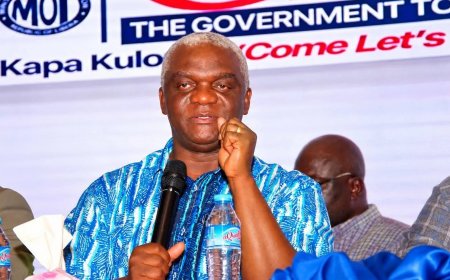
Recently, the leadership of the Inter-religious Council (IRCL) of Liberia, including representatives from the Liberia Council of Churches (LCC), in a press conference endorsed the bill and called for its passage at the level of the Liberian Senate.
The Council stated that its support for the proposed bill in entirety is driven by provisions to improve healthcare access and maternal protections. However, the endorsement has parked debate among member organizations of the Inter-religious Council.
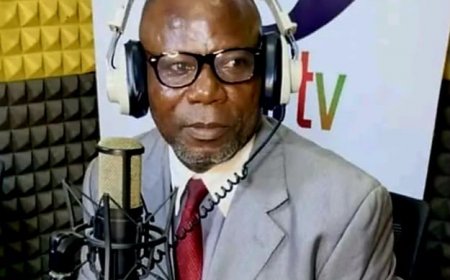
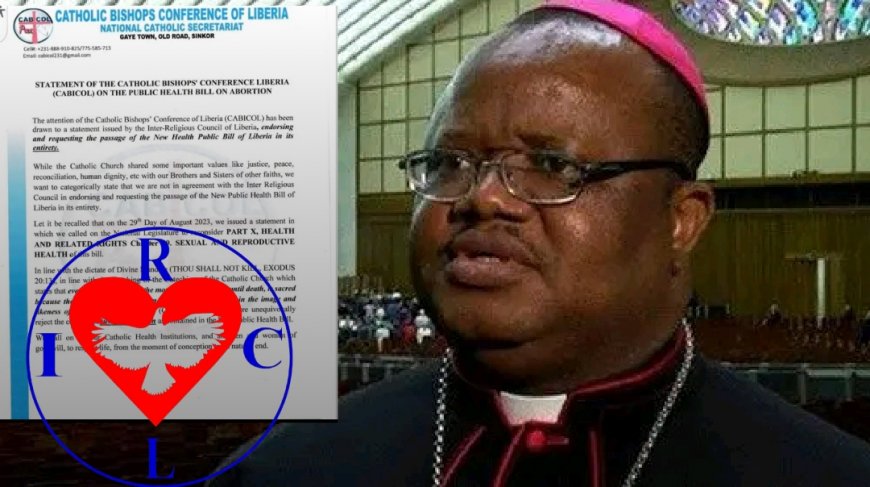
In a strong opposition, the Catholic Bishops' Conference of Liberia (CABICOL) has criticized the move, stating that certain provisions within the bill are inconsistent with teachings on the protection of human life in the religious setting.
CABICOL, however, distanced itself from the decision by the Inter-religious Council of Liberia. In a statement issued in Monrovia, Catholic Bishops clarified that while they do not oppose bill in entirely, they detest provisions for abortion to be legalized under any circumstances.
The bishops emphasized that although the Catholic Church has historically worked closely with other faith communities on matters relating to justice, peace, reconciliation, and human dignity, such cooperation does not extend to endorsing every policy position adopted by partner organizations.
According to the statement, the Church's objection also centers on clauses in the proposed legislation it believes would undermine the sanctity of life, and contradict core Catholic doctrine.
"The attention of the Catholic Bishops' Conference of Liberia (CABICOL) has been drawn to a statement issued by the Inter-Religious Council of Liberia, endorsing and requesting the passage of the New Health Public Bill of Liberia in its entirety".
"While the Catholic Church shared some important values like justice, peace, reconciliation, human dignity, etc with our Brothers and Sisters of other faiths, we
want to categorically state that we are not in agreement with the Inter Religious Council in endorsing and requesting the passage of the New Public Health Bill of Liberia in its entirety".
"In line with the dictates of Divine Mandate (THOU SHALL NOT KILL, EXODUS 20:13), in line with the Teaching of the Catechism of the Catholic Church, we once more unequivocally reject the concept of justified abortion as contained in the New Public Health Bill", CABICOL's position statement read.
Despite the split over the endorsement, CABICOL reaffirmed its commitment to interfaith collaboration on national issues, stressing that its disagreement with the Inter-Religious Council is squarely confined to the Public Health Bill.
The latest controversy exposes a major rift within Liberia's religious community over one of the country's most debated pieces of legislation, as stakeholders continue to weigh the potential implications of the proposed law.
What's Your Reaction?
 Like
0
Like
0
 Dislike
0
Dislike
0
 Love
0
Love
0
 Funny
0
Funny
0
 Angry
0
Angry
0
 Sad
0
Sad
0
 Wow
0
Wow
0