



































CBL Moves to Introduce L$2,000 Banknote as Part of L$79 Billion Currency Expansion Plan Covering 2026–2030
The Central Bank of Liberia proposes a new L$2,000 banknote as part of a L$79 billion currency expansion plan covering 2026–2030, citing liquidity pressure, damaged notes, and rising cash demand.

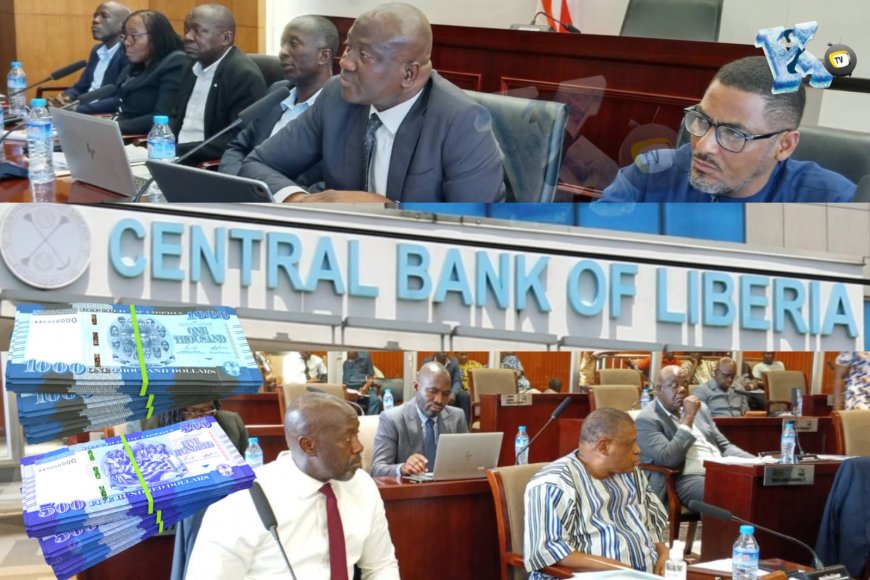
Monrovia, Liberia: The Central Bank of Liberia has formally advanced a major currency restructuring proposal before the Joint Committees of the Liberian Senate on Banking and Currency, Ways, Means, Finance and Budget, and Public Accounts and Audits, seeking approval for the introduction of a new L$2,000 banknote alongside the printing of L$79 billion scheduled between 2026 and 2030, a policy shift that places Liberia’s monetary system under renewed legislative and historical scrutiny.
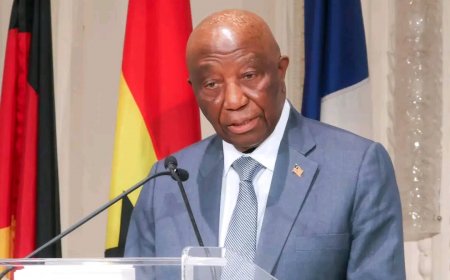
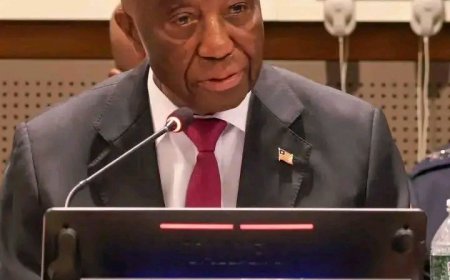
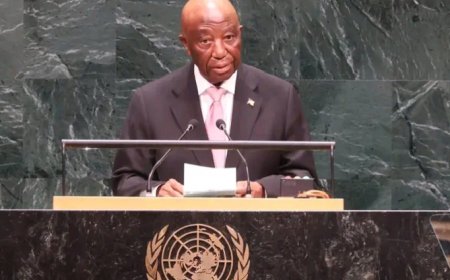
Presenting the plan before the joint committees at the Capitol Building on Tuesday, April 21, 2026, CBL Executive Governor Henry F. Saamoi anchored the proposal on structural liquidity constraints, rising cash-based transaction demand, and persistent currency deterioration, while positioning the introduction of the L$2,000 note as part of a long-running reform trajectory aimed at stabilizing and modernizing Liberia’s currency architecture.
“The L$2,000 note is designed to reduce the physical burden of cash handling and improve transaction efficiency where large payments still rely heavily on paper currency,” Governor Saamoi told the Senate committees.
The Central Bank proposal reflects the broader historical evolution of Liberia’s currency system, tracing back to the 2000 currency unification under former President Charles Taylor, when the dual “J.J.” and “Liberty” notes were consolidated into a single system, followed by successive reforms that sought to stabilize monetary circulation and restore public confidence in the national currency.
Further reforms included the introduction of the L$500 note in 2016 under the administration of former President Ellen Johnson Sirleaf, followed by the 2021–2024 currency replacement program that authorized a new currency family including the first-ever L$1,000 note, alongside the conversion of smaller denominations into coins, with approximately L$48.7 billion printed to replace mutilated and unfit banknotes.
“Our proposal is to print seventy-nine billion Liberian dollars to cover the period 2026 to 2030, starting with L$14.7 billion in 2026 and the remainder distributed over subsequent years based on economic demand and replacement cycles...., this is not simply about increasing money supply; it is about replacing damaged currency, meeting rising transaction demand, and strengthening monetary policy effectiveness in a cash-driven economy,” the CBL Governor Saamoi disclosed, emphasizing that the policy is a technical response to economic realities.
According to the Central Bank, currency deterioration remains a persistent structural issue, with an estimated seven percent annual damage rate affecting previously issued banknotes, contributing to recurring liquidity pressure and reduced availability of fit currency in circulation, particularly within commercial banking channels.
Saamoi also highlighted the continued dominance of the United States dollar in domestic transactions, stating that, “the Liberian dollar still accounts for less than 40 percent of circulating value usage, while the US dollar remains dominant in major segments of economic activity,” underscoring the currency imbalance the reform seeks to address.
He further linked the proposal to macroeconomic performance, referencing 5.1 percent GDP growth in 2024 and expanding fiscal operations, adding that, “as the economy expands, there is a corresponding need for adequate currency supply to support transaction volumes and maintain economic continuity.”
The Governor added that the L$79 billion projection remains an estimate subject to adjustment, including under potential de-dollarization scenarios, stating that, “if the economy moves toward reduced reliance on foreign currency, additional Liberian dollar issuance beyond current projections may become necessary.”
What's Your Reaction?
 Like
0
Like
0
 Dislike
0
Dislike
0
 Love
0
Love
0
 Funny
0
Funny
0
 Angry
0
Angry
0
 Sad
0
Sad
0
 Wow
0
Wow
0