






































LRA Moves Toward Digital Tax System To Modernize Revenue Collection
The Liberia Revenue Authority has launched new digital tax platforms aimed at modernizing revenue collection, improving taxpayer access, and strengthening voluntary compliance through expanded online services and systems integration.

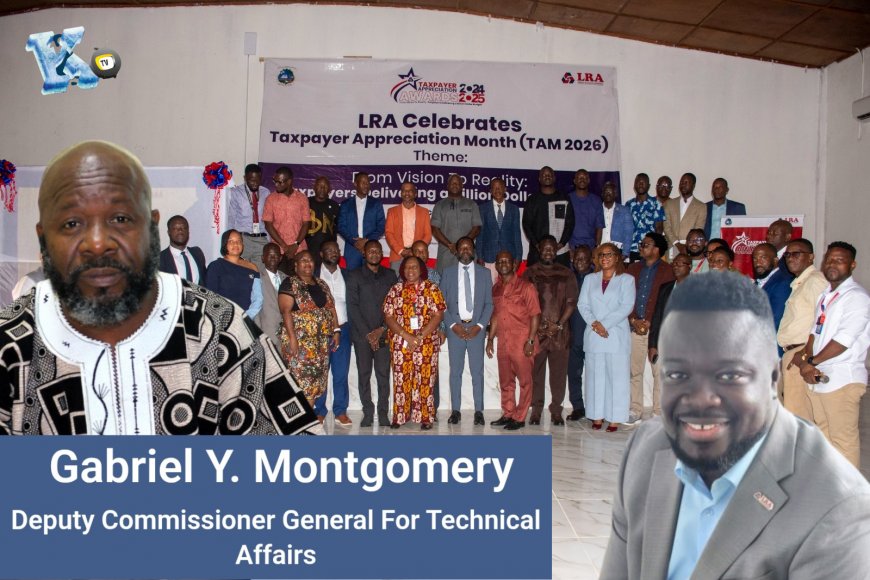
MONROVIA, LIBERIA — April 15, 2026: The Liberia Revenue Authority (LRA) has outlined a renewed push toward a more digitized tax administration system, signaling a major shift aimed at modernizing revenue collection processes and improving taxpayer access to services across the country.
The initiative was highlighted at the Authority’s first digital symposium held in Paynesville on Wednesday, April 15, 2026, where officials presented a range of online platforms designed to reduce long-standing challenges associated with tax payment, including delays, procedural complexity, and limited service access for taxpayers.
The symposium, as part of Taxpayer Appreciation Month, brought together representatives from commercial banks, mobile money operators, and development partners to discuss how digital systems can reshape tax administration and strengthen voluntary compliance within Liberia’s revenue framework.
Speaking at the event, the LRA Deputy Commissioner General for Technical Affairs, Gabriel Y. Montgomery, emphasized that the institution’s digital shift goes beyond modernization, stressing its role in breaking down barriers that discourage compliance among taxpayers.
“When tax systems are simple and accessible, compliance improves naturally, and revenue collection becomes more efficient,” Montgomery said.
He further underscored that expanding digital payment channels remains central to improving domestic revenue generation while reducing the operational burden on taxpayers across different sectors.
Also addressing the symposium, Assistant Commissioner for the Management Information Systems Division, Kollie U. Zayzay, acknowledged that tax compliance in Liberia has historically been hindered by fragmented systems and administrative bottlenecks that complicated processes for both individuals and businesses.
He noted that the LRA is actively working to reverse that perception through a structured digital transformation strategy anchored in improved systems integration and service delivery efficiency.
At the center of this reform agenda is the Liberia Integrated Tax Administration System (LITAS), which enables taxpayers to register, file tax returns, generate payment slips, and complete transactions in real time through a centralized digital platform.
Assistant Commissioner Zayzay also disclosed that the Authority is deploying a series of complementary digital tools, including electronic tax clearance certificates, online verification platforms, duty-free application systems, whistleblower reporting channels, and electronic fiscal devices designed to monitor transactions in real time.
In addition, he explained that the LRA is strengthening collaboration with commercial banks, mobile money service providers, and the Central Bank of Liberia to ensure seamless and real-time tax payment processing nationwide.
Looking ahead, Zayzay revealed that several new innovations are in development, including electronic invoicing systems, a VAT module integrated within LITAS, and a dedicated taxpayer contact center aimed at improving communication and service delivery.
Recognizing the country’s digital divide, he added that the Authority is also introducing USSD-based services to ensure accessibility for taxpayers who do not own smartphones, allowing broader participation in the digital tax ecosystem.
The symposium also provided a platform for stakeholders to examine key operational issues, including system integration, user adoption, and the infrastructural requirements necessary to sustain a fully functional digital tax environment.
The LRA maintains that its broader objective is to build a transparent, efficient, and user-friendly tax system that encourages voluntary compliance while strengthening national development efforts.
Officials believe that by reducing inefficiencies and simplifying tax procedures through digital transformation, the Authority can significantly improve revenue performance and contribute to rebuilding public trust in Liberia’s tax administration system.
What's Your Reaction?
 Like
0
Like
0
 Dislike
0
Dislike
0
 Love
0
Love
0
 Funny
0
Funny
0
 Angry
0
Angry
0
 Sad
0
Sad
0
 Wow
0
Wow
0