


























NPHIL Scientists in Limbo: Inducted, Working, Yet Off Gov't Payroll
A K-News investigation has established deepening dissatisfaction among some laboratory scientists at the National Public Health Institute of Liberia (NPHIL) over a reported salary crisis. Documents and official records revealed by K-News, depict that workers recruited, employed, and publicly inducted into the institution, are off the government payroll and have gone months without receiving full stipends.

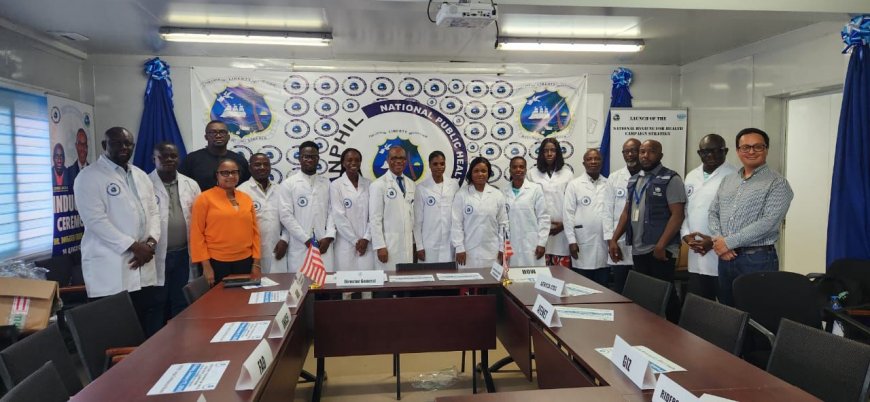
Monrovia, Liberia: A K-News investigation has established deepening dissatisfaction among some laboratory scientists at the National Public Health Institute of Liberia (NPHIL) over a reported salary crisis.
Documents and official records revealed by K-News, depict that workers recruited, employed, and publicly inducted into the institution, are off the government payroll and have gone months without receiving full stipends.
It can be recalled in December 2024, NPHIL recruited about 15 young Liberians as Research, Laboratory, and Diagnostic Scientists. They were officially inducted on January 17, 2025.
The scientists were issued employment letters dated December 30, 2024, and signed by then NPHIL Director-General Dr. Dougbeh Chris Nyah.
The letters appointed them as Laboratory Scientists within the Division of Laboratory and Public Health Diagnostics and stated that the appointments took immediate effect, subject to a three-month probationary period.
The letters further indicated that upon completion of the probation period, employees would be assessed for confirmation, extension, or termination.
According to the affected workers, they successfully completed the probation period around April 2025 and have continued to report to work and perform their professional duties.
However, more than a year later, several of them say they have neither been formally confirmed nor terminated and have not been transitioned onto the Civil Service Agency payroll despite continuing to provide critical laboratory and diagnostic services.
The workers claim they were informed during their induction that NPHIL would assume financial responsibility for them during the probation period and that successful completion of the probation would result in full employment and placement on the government payroll.
According to findings, no official communication has been provided regarding their current employment status.
Some of the affected employees further allege that resistance to their placement on payroll stems from the fact that they were recruited during the administration of former Director-General Dr. Dougbeh Chris Nyah, though this claim has not been independently verified.
The concerns come at a time when Liberia is strengthening preparedness measures against Ebola and other emerging public health threats, placing renewed attention on the welfare, stability, and motivation of frontline laboratory personnel responsible for disease detection, surveillance, and diagnosis.
In addition to payroll concerns, the workers allege that they have not received regular stipends since January 2026. According to them, recent payments received by some staff members fell significantly below expectations.
They claim that some Master's degree holders received approximately LRD 19,980, while some Bachelor's degree holders received around LRD 14,000, amounts they say represent only a fraction of what is owed.
The employees also expressed concern over what they describe as derogatory and unprofessional remarks allegedly directed at staff recruited under the previous administration.
According to the workers, a senior official allegedly referred to them as "step-children," a characterization they say was insulting, demoralizing, and disrespectful to trained professionals who continue to serve the institution.
The affected workers are calling on NPHIL management, the Civil Service Agency, and relevant government authorities to clarify their employment status, address outstanding stipend payments, and ensure equal treatment of all staff members regardless of the administration under which they were recruited.
They argue that resolving the matter is essential not only for their welfare but also for maintaining a motivated and effective public health workforce capable of responding to national health emergencies.
Efforts to obtain NPHIL's side of the story proved unsuccessful. Repeated calls and messages to the institution's communications officer seeking clarification on the workers' employment status, payroll placement, stipend payments, and other concerns were not answered before publication.
What's Your Reaction?
 Like
0
Like
0
 Dislike
0
Dislike
0
 Love
0
Love
0
 Funny
0
Funny
0
 Angry
0
Angry
0
 Sad
0
Sad
0
 Wow
0
Wow
0