
































Public Sector Under Microscope: President Boakia Recognizes 31 Government Entities In National Performance Review
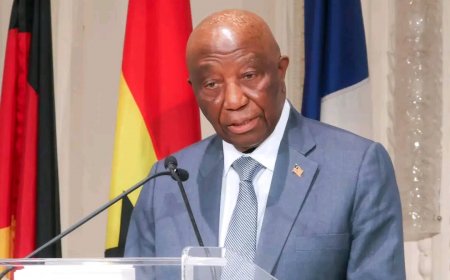
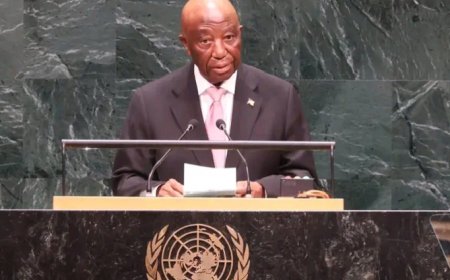
President Joseph Boakai has officially recognized approximately 31 ministries, agencies, and state-owned enterprises for high performance under the 2025 Performance Management and Compliance System (PMCS), while simultaneously initiating the 2026 performance contracting cycle, unveiling a real-time digital monitoring framework, and institutionalizing a results-based governance order anchored on measurable outputs, public disclosure, and enforceable compliance standards. The ceremony, held on April 20, 2026 at the Ellen Johnson Sirleaf Ministerial Complex represented a transition from fragmented administrative reporting to a unified national performance architecture, as the President positioned the PMCS within the operational core of the ARREST Agenda, thereby consolidating accountability, responsiveness, efficiency, sustainability, and transparency into a singular evaluative framework governing state institutions. Addressing heads of institutions and stakeholders, President Boakai emphasized the binding nature of the performance framework, stating that “for every head of institutions signing performance contract today, what you sign is not a check, nor a bureaucratic formality, it is a covenant with the Liberian people,” further emphasizing that “the system is designed to track your progress every quarter, the results will be published and Liberians will own,” a formulation that reconstitutes governance as a public trust defined not by procedural compliance but by demonstrable institutional outcomes.


Monrovia, Liberia: President Joseph Boakai has officially recognized approximately 31 ministries, agencies, and state-owned enterprises for high performance under the 2025 Performance Management and Compliance System (PMCS), while simultaneously initiating the 2026 performance contracting cycle, unveiling a real-time digital monitoring framework, and institutionalizing a results-based governance order anchored on measurable outputs, public disclosure, and enforceable compliance standards.
The ceremony, held on April 20, 2026 at the Ellen Johnson Sirleaf Ministerial Complex represented a transition from fragmented administrative reporting to a unified national performance architecture, as the President positioned the PMCS within the operational core of the ARREST Agenda, thereby consolidating accountability, responsiveness, efficiency, sustainability, and transparency into a singular evaluative framework governing state institutions.
Addressing heads of institutions and stakeholders, President Boakai emphasized the binding nature of the performance framework, stating that “for every head of institutions signing performance contract today, what you sign is not a check, nor a bureaucratic formality, it is a covenant with the Liberian people,” further emphasizing that “the system is designed to track your progress every quarter, the results will be published and Liberians will own,” a formulation that reconstitutes governance as a public trust defined not by procedural compliance but by demonstrable institutional outcomes.
The disclosure of institutional results established a hierarchy of administrative effectiveness, with the National Port Authority attaining the highest recorded score of 95.2 percent, followed by the Liberia Extractive Industries Transparency Initiative Secretariat at 94.8 percent, while the National Road Fund secured 93 percent based on audit compliance and implementation benchmarks, as sustained high-level performance was similarly attributed to the Liberia Agricultural Commodities Regulatory Authority and the Jackson F. Doe Memorial Regional Hospital across successive evaluation cycles.
The recognition framework further extended to institutional reform and service delivery advancements, with the Civil Service Agency acknowledged for modernization initiatives and the Monrovia City Corporation distinguished for measurable improvements in infrastructure and waste management systems, while a broader cohort of high-performing entities—including the Liberia Petroleum Refining Company, Ministry of Public Works, Ministry of Foreign Affairs, Ministry of National Defense, National Oil Company of Liberia, Liberia Electricity Regulatory Commission, Public Procurement and Concessions Commission, Liberia Institute for Statistics and Geo-Information Services, the WASH Commission, and the Liberia Airport Authority—met established national benchmarks within the performance cycle.
Institutional grading disclosed at the ceremony reinforced the differentiated state of institutional capacity, as the Ministry of Foreign Affairs achieved a Grade A rating, the Ministries of Transport, Justice, and Labor were positioned within the B to B-minus range, a cluster of central ministries including Finance, State, Public Works, Defense, Gender, Information, and Post were classified under Grade C, while the Ministry of Mines and Energy registered Grade D and both the Ministries of Internal Affairs and Youth and Sports were assigned Grade F, thereby delineating clear performance disparities within the administrative structure.
Advancing the technical dimension of the reform, President Boakai announced the deployment of a Performance Management Information System (PMIS), conceptualized as a real-time digital dashboard for continuous monitoring, evaluation, and public disclosure of institutional performance, while underscoring that “no performance will go unmeasured,” and reaffirming that the 100-point evaluation matrix allocates weighted emphasis to internal system strengthening, service charter development, public dissemination, and performance reporting.
Situating performance within a coordinated governance ecosystem, the President stated that “performance is a partnership between leadership and the institutions they lead,” further clarifying that “where institutions need technical support, the cabinet will ensure it is provided, where capacity gaps persist, we will invest in training, and where funding constraints exist, we will work to close those gaps,” thereby aligning institutional expectations with state-supported capacity enhancement mechanisms.
In consolidating the ideological trajectory of the initiative, President Boakai asserted that “the event marks a transition from a government that plans to a government that performs, from a government that reports to a government that is held accountable, and from a government that manages to a government that improves,” establishing a sequential reform logic through which institutional performance is systematically tracked, publicly validated, and incrementally strengthened, target by target and year by year, within a governance model defined by measurable national delivery.
What's Your Reaction?
 Like
0
Like
0
 Dislike
0
Dislike
0
 Love
0
Love
0
 Funny
0
Funny
0
 Angry
0
Angry
0
 Sad
0
Sad
0
 Wow
0
Wow
0