


































Liberia Digitizes Farm Exports to Cut Delay and Boost Global Trade
Farmers and exporters in Liberia could soon spend less time battling paperwork and more time accessing international markets, as the country rolls out a new electronic system to certify agricultural exports. The government has launched an electronic phytosanitary certification platform, known as the e-Phyto system, replacing a largely manual process that has long slowed trade and exposed the sector to inefficiencies.

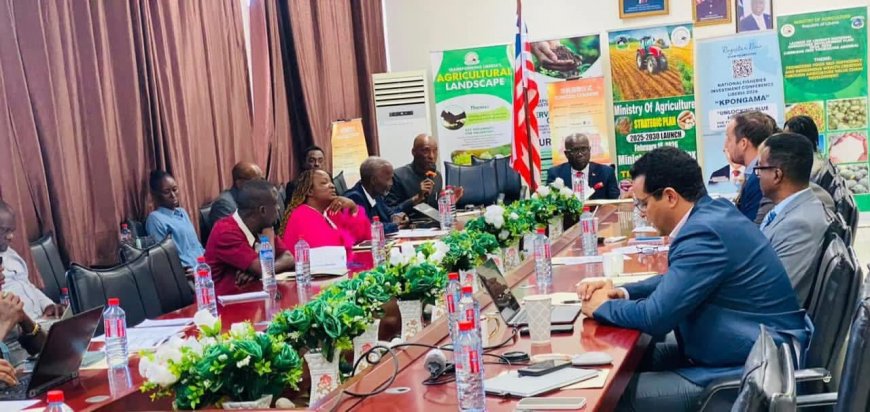
Monrovia, Liberia: Farmers and exporters in Liberia could soon spend less time battling paperwork and more time accessing international markets, as the country rolls out a new electronic system to certify agricultural exports.
The government has launched an electronic phytosanitary certification platform, known as the e-Phyto system, replacing a largely manual process that has long slowed trade and exposed the sector to inefficiencies.
Officials say the shift is not just about technology—but about removing long-standing barriers that have limited Liberia’s agricultural potential.
Speaking at the occasion on behalf of Agriculture Minister J. Alexander Nuetah, the Deputy Minister for Technical Services Solomon Hedd-Williams described the initiative as a major transformation for the farming industry.
He said the system signals a move toward a more transparent and globally connected agricultural economy.
“This is more than a technological upgrade. It is a bold step toward efficiency, transparency, and global integration.”
For years, exporters have relied on paper-based phytosanitary certificates—documents required to prove that plants and plant products meet international health standards.
The process often involved delays, duplication, and risk of document tampering. With the new digital system, certificates can now be issued, transmitted, and verified electronically—reducing turnaround time and improving trust between trading partners.
The reform is backed by international partners, including the Global Alliance for Trade Facilitation, the Food and Agriculture Organization, and the International Plant Protection Convention.
As speaking at the occasion on Tuesday, April 21st in Monrovia, Project Manager Laura Garrone says the system is designed to lower trade costs while opening doors for smaller exporters who often struggle to compete.
“The ePhyto solution provides a secure and internationally recognized system… helping to reduce trade costs, improve predictability, and expand opportunities—especially for small businesses.”
The rollout is being implemented through the Regional ePhyto Africa Window, with financial backing from the Government of Sweden—support aimed at strengthening Liberia’s digital trade infrastructure and long-term capacity.
Implementation has already begun in Monrovia, where stakeholders are undergoing training, testing the system, and aligning national procedures with the new platform.
The mission marks a critical transition—from planning to actual operation—bringing together inspectors, government officials, and private sector actors to ensure the system functions effectively.
For Liberia, the move represents more than administrative reform. It is part of a broader push to position agriculture as a driver of economic growth, exports, and job creation in an increasingly digital global market.
What's Your Reaction?
 Like
0
Like
0
 Dislike
0
Dislike
0
 Love
0
Love
0
 Funny
0
Funny
0
 Angry
0
Angry
0
 Sad
0
Sad
0
 Wow
0
Wow
0