




































Stakeholders Reaffirm Commitment to Liberia's Land Rights Act

MONROVIA, LIBERIA – Government officials, lawmakers, civil society organizations, and development partners have renewed their commitment to safeguarding and fully implementing Liberia's Land Rights Act of 2018, describing the law as a critical instrument for peacebuilding, sustainable development, and the protection of customary land rights.
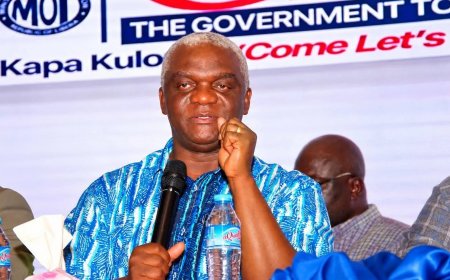
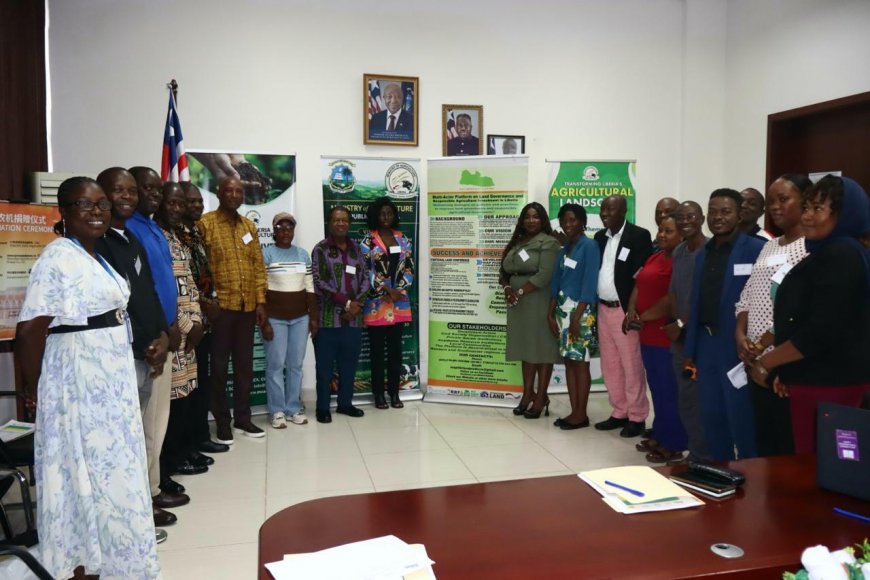
The commitment was reaffirmed during an advocacy dialogue held Wednesday at the Ministry of Agriculture (MOA) Conference Room under the theme of strengthening support for the implementation of the Land Rights Act. The event was organized by the MAP Liberia Land Platform, the Sustainable Development Institute (SDI), and other partners, with support from the International Land Coalition and Welthungerhilfe.
The dialogue brought together members of the Senate Committee on Lands, Mines, Energy, Natural Resources and Environment, government officials, civil society actors, traditional leaders, and representatives of development organizations to review progress, identify implementation challenges, and discuss ways to strengthen land governance across Liberia.
Speaking during the opening session, Mr. James Yarsiah of the MAP Liberia Land Platform described the Land Rights Act as one of Liberia's most progressive pieces of legislation, resulting from nearly two decades of consultations, advocacy, and reform efforts.
According to Yarsiah, the law has fundamentally changed Liberia's land governance framework by granting legal recognition and protection to customary landowners, who account for more than 60 percent of the country's population.
"For the first time in our history, whether you live in customary communities or in urban and peri-urban communities, the law grants security of tenure," Yarsiah said. "Before this law, customary communities did not have legal protection over their land."
He emphasized that the legislation aligns with international best practices and mirrors reforms adopted across Africa to promote peace, reduce land-related conflicts, and encourage sustainable development.
Yarsiah acknowledged that implementation of the law has been slower than expected but pointed to significant progress made in recent years. He disclosed that 70 customary communities have successfully completed the process of obtaining land deeds, while another 150 communities are currently formalizing their land rights.
He noted that more than one million rural Liberians are either already benefiting from secure land tenure or are in the process of obtaining legal recognition for their community lands.
Representing Deputy Minister for Planning and Development Hon. David K. Akoi, Ministry of Agriculture Director of Statistics Mr. Kollie Dogba reiterated the ministry's support for the implementation of the Land Rights Act.
Dogba said land remains central to Liberia's agricultural development agenda and is directly linked to national goals for food production, economic growth, and rural transformation.
"The Ministry of Agriculture views land as a critical factor in achieving our development targets," he said. "The stability of access, governance, and rights to land is essential, and the 2018 Land Rights Act provides that foundation."
He praised the role of the MAP Liberia Land Platform and civil society organizations in promoting land governance reforms and highlighted the law's positive impact on women.
According to him, increased access to land rights is helping to empower women economically and improve their participation in agriculture and rural development initiatives.
Dogba urged stakeholders to focus advocacy efforts on documenting and publicizing the positive outcomes of the law's implementation, particularly its benefits for women and rural communities.
The Legislature also reaffirmed its support for strengthening implementation of the law.
Delivering remarks on behalf of Senator Simeon Taylor, Chairman of the Senate Committee on Lands, Mines, Energy, Natural Resources and Environment, Mrs. Josephine Karnu described the passage of the Land Rights Act as a historic milestone in Liberia's pursuit of justice, equity, and sustainable development.
She stressed, however, that enacting the law was only the first step and called for sustained efforts to ensure that its promises become reality for all Liberians, especially those living in rural communities.
"Our collective responsibility is to ensure that the promises of this law become a reality for every Liberian whose livelihood depends on secure access to land and natural resources," Karnu said.
She assured participants of the Senate Committee's commitment to providing effective legislative oversight and supporting policies that promote transparency, accountability, and fairness in the management of Liberia's land resources.
Karnu warned that unresolved land disputes continue to pose significant threats to peace, investment, and development and called for stronger collaboration among government institutions, civil society organizations, development partners, and local communities.
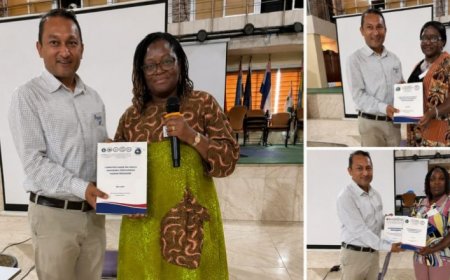
The dialogue also featured the presentation of a policy brief titled "Defending Land, Protecting Rights: Safeguarding Liberia's Land Rights Act (2018)." The report highlights the historical evolution of land governance in Liberia, outlines the benefits of the Land Rights Act, identifies implementation challenges, and calls for stronger political support to safeguard the law.
Among the challenges highlighted were limited institutional capacity, inadequate funding, low public awareness, overlapping institutional mandates, and resistance to reforms that strengthen community land rights.
Participants concluded the dialogue by emphasizing that strengthening implementation—not weakening the law—remains the most effective path toward reducing land disputes, protecting customary landowners, encouraging responsible investment, and promoting sustainable development.
As Liberia continues its efforts to reform land governance, stakeholders expressed optimism that stronger collaboration among government, lawmakers, civil society, and development partners will accelerate the implementation of the Land Rights Act and ensure that its benefits reach communities across the country.
What's Your Reaction?
 Like
0
Like
0
 Dislike
0
Dislike
0
 Love
0
Love
0
 Funny
0
Funny
0
 Angry
0
Angry
0
 Sad
0
Sad
0
 Wow
0
Wow
0